
Are you ready to make your real estate dreams a reality? Building a real estate empire might seem hard, but with the right plan, you can do it. This guide will show you how to grow from a side hustle to a real estate giant. You’ll learn how to find financial freedom and build wealth through smart investments.
Stop chasing sales and start building systems for growth. Use tools like Pro AI and REN 360 to improve your operations. As you grow from solo to team leader, enjoy the journey and aim for lasting success in real estate.
Key Takeaways:
- Transform your real estate dreams into a thriving empire through strategic planning and infrastructure.
- Focus on building systems and processes for scalability rather than chasing constant sales.
- Leverage advanced tools to formalize your business approach and track key performance indicators.
- Embrace the transition from solo entrepreneur to team leader, setting the stage for sustainable success.
- Prioritize wealth building and financial freedom through smart property investments.
Understanding the Real Estate Landscape
Getting to know the real estate market is key to your success. By keeping up with market trends and industry jargon, you can spot new chances and hurdles. It’s vital to keep learning as the real estate world changes fast. Being able to adjust quickly can be a game-changer.
The Current Market Trends
The real estate market is always changing. Knowing the latest market analysis helps you make smart choices. From rate changes to price swings, staying informed lets you move through the market with ease.
| Trend | Impact |
|---|---|
| Increased demand for residential properties | Opportunity for investment in single-family homes and multifamily units |
| Rising interest rates | Potential challenges for affordability, but may create opportunities in rental properties |
| Growing popularity of office-to-residential conversions | Chance to capitalize on underutilized commercial spaces and meet the demand for housing |
Key Terminology Demystified
The real estate world is full of industry jargon that can confuse newcomers. Knowing these terms lets you move through the market with confidence. It also helps you speak like a pro in real estate.
- Capitalization rate: A metric used to evaluate the potential return on investment for a property
- Appreciation: The increase in a property’s value over time
- Amortization: The process of paying off a loan, such as a mortgage, through regular payments
- Zoning laws: Regulations that govern how a property can be used, such as residential, commercial, or industrial
“Continuous learning is the key to success in the ever-evolving real estate industry. Stay informed, adapt quickly, and you’ll be well on your way to building your own real estate empire.”
Defining Your Real Estate Goals
Starting a successful real estate journey needs a clear plan. First, set both short-term and long-term goals that match your business vision and financial dreams. Make sure your goals are specific, measurable, achievable, relevant, and have a deadline (SMART) to keep you focused and driven.
Short-Term vs. Long-Term Objectives
Start with short-term goals like getting your first investment property or boosting your rental income. These goals help you gain momentum and build a strong base for your future real estate ventures.
Next, set long-term goals like reaching financial freedom or growing a large portfolio. These goals help you see the bigger picture and guide your choices.
Financial Projections and Budgeting
- Make detailed financial plans to understand your investment’s potential returns and costs.
- Have a budget for buying, renovating, and running your properties, plus maintenance.
- Plan for unexpected costs by including contingencies in your budget.
- Keep updating your financial plans to match your business and personal goals.
By setting clear goals and planning your finances well, you’re on the path to making your real estate dreams come true.
| Goal Setting Strategies | Success Rates |
|---|---|
| Setting specific, measurable goals | 60% more likely to achieve goals |
| Establishing deadlines for goals | 30% more likely to achieve goals |
| Embracing failure as a learning opportunity | 85% of top-performing agents highlight this |
| Continuously setting new goals after achieving existing ones | 40% more likely to experience consistent success |
“Successful real estate agents understand the power of goal setting. By aligning your short-term and long-term objectives with a solid financial plan, you can turn your real estate dreams into a thriving reality.”
Building Your Knowledge Base
To thrive in the real estate world, you must keep learning and improving. Whether you’re new or experienced, always be open to learning more. Spend time on real estate education through online courses, reading, and getting advice from mentors. This will help you stay on top of the latest trends.
Resources for Learning
There are many ways to learn more about real estate. Use online courses and webinars to learn about market analysis and more. Also, read blogs, listen to podcasts, and read books to get insights from experts.
Networking and Mentorship Opportunities
- Look for experienced real estate people who can mentor you. They can share their knowledge and experiences.
- Go to local real estate events to meet others. This is a great way to make connections and learn from others.
- Use online forums and social media to talk with more people. This can help you share ideas and learn from others.
Finding a Local Real Estate Group
Being part of a local real estate group can really help you. These groups offer chances to network and learn from others. You can meet investors, property managers, and experts. This is a great way to stay updated on the market and find new opportunities.
“Continuous learning and adaptation are necessary in the real estate industry. Setting up a system for tracking progress is vital for success.”
| Key Benefit | Description |
|---|---|
| Real Estate Education | Develop specialized skills and knowledge through online courses, industry publications, and mentorship opportunities. |
| Industry Networking | Connect with experienced professionals, collaborate on deals, and stay informed about market trends. |
| Mentorship | Gain valuable insights and guidance from seasoned real estate investors to accelerate your learning and growth. |
Crafting Your Business Plan
Starting a real estate venture needs a solid business plan. This plan is your guide to success. It focuses on identifying your niche and conducting a comprehensive competitive analysis. By knowing your market and competitors, you can stand out in the real estate world.
Identifying Your Niche
To grow a real estate business, find a unique market niche. Look at trends, demographics, and new opportunities. This helps you know where you can offer the most value.
By focusing on a certain type of property or location, you can serve your clients better. This makes your business stand out.
Competitive Analysis
Doing a deep competitor research is key to a winning strategy. Look at what your competitors do well and what they don’t. Find gaps in the market and use your strengths to outdo them.
This analysis helps you improve your services, prices, and marketing. It makes sure your real estate business is noticed in a busy market.
| Key Considerations | Importance |
|---|---|
| Market Trends | Identify emerging opportunities and shifts in consumer demand |
| Competitor Strategies | Understand their unique selling points, pricing models, and marketing tactics |
| Target Audience Preferences | Tailor your offerings and communication to meet the specific needs of your ideal clients |
| Unique Value Proposition | Develop a clear and compelling reason for customers to choose your real estate services |
With a well-thought-out business plan, you’re ready to succeed in real estate. You’ll build a lasting and successful real estate empire.
Financing Your Real Estate Ventures
Starting a real estate journey needs smart financing. As a new real estate investor, it’s key to know your financing options. From bank loans to private partnerships, understanding these can help you grow.
Different Financing Options
The real estate world offers many financing choices. Banks and lenders provide mortgages, using your credit and property as collateral. But, creative investors use other people’s money (OPM) through private equity, crowdfunding, or syndication.
Big names like Donald Bren and Stephen Ross used OPM to grow. They partnered with private investors for more capital, expertise, and advice. This helped them expand their real estate and reduce personal risk.
Building Your Credit Score
A good credit score is key for better loans. Work on improving your credit by paying off debt and making timely payments. This makes you a more attractive borrower, opening doors to better rates and terms.
How to Approach Private Investors
Getting private investors to partner with you needs a smart plan. Start with a detailed business plan that shows your expertise and investment plans. Show your credibility with past successes and a clear vision for the future. This helps create partnerships that benefit both sides.
| Investor | Achievements |
|---|---|
| Ashley Wilson | Manages over 1,500 units and has handled $13M in construction and $165M in transactions |
| Adit Shah | Syndicated $20 million of real estate in a few years, raising $7 million in private equity |
| David Osborn | Oversees a real estate portfolio with over 1,500 doors under his management |
| Tim Rhode | Transitioned from selling 2,500 homes to investing in over 100 properties, achieving financial freedom by 40 |
| David Pere | Secured 79 units in one deal and has grown his portfolio to over 100 units |
By looking into different financing options, improving your credit, and building partnerships, you can succeed in real estate. Use real estate financing, credit improvement, and investor relations to make your real estate dreams come true.
Navigating Legal Considerations
Starting your real estate journey means getting to know the laws and rules of this field. It’s key to understand real estate law and follow the rules. Every real estate investor must be careful in this complex world.
Understanding Real Estate Laws
Real estate laws differ by state and city. It’s important to know the laws in your area. For example, in California, you need 135 hours of education, pass a test, and pay a fee of about $245.
Knowing these rules is just the start. You also need to keep up with new laws, zoning rules, and property rights.
Importance of Contracts and Agreements
Creating detailed contracts and agreements is crucial for real estate deals. These documents protect your interests and help deals go smoothly. They cover important topics like real estate law, legal compliance, and contract management.
To stay legal, work with experienced lawyers. They can help you understand the rules, guide contract talks, and keep your investments safe.

“Navigating the legal landscape of real estate is like traversing a minefield – one misstep can have devastating consequences. Surround yourself with knowledgeable legal experts to ensure your investments are protected and your ventures remain compliant.”
Finding Your First Property
Starting your real estate journey means finding your first property. This step is called property scouting. It’s about looking for the right places and checking out potential properties. With a smart plan, you can find great deals and start your real estate career.
Researching the Right Locations
Finding the right location is crucial for making money in real estate. Look for areas that fit your goals and budget. Check things like population growth, job trends, and new developments that might raise property values.
Use online tools, local databases, and real estate experts to get all the info you need.
- Find areas with high rental demand and value growth potential
- Look at community features, transport, and infrastructure
- Search for up-and-coming neighborhoods with growth potential
Assessing Properties Effectively
After finding good locations, it’s time to check out properties. Look at things like condition, size, number of rooms, and rental income. Use online tools, reports, and real estate pros to figure out a property’s true worth.
- Check the property’s condition and needed repairs
- Guess the rental income and costs
- Find special features or opportunities that add value
By using smart property scouting, detailed location analysis, and careful property evaluation, you’ll find your first great real estate deal.
“The key to real estate success is not just finding a property, but finding the right property in the right location.”
Keep this in mind, and you’ll start building a strong real estate portfolio.
The Art of Negotiation
Negotiation is key for real estate investors. It helps you get good deals and find great opportunities. Knowing what sellers want is crucial for successful talks.
Building Your Negotiation Skills
Start by getting ready. Know the market and property values. Find out what sellers might be worried about. Use different strategies, like listening well and making smart offers, to help everyone win.
Go into talks with confidence and care. Be open to finding new ways to solve problems.
Understanding Seller Motivations
Look at things from the seller’s side to get ahead. Find out why they want to sell. Is it because they need money fast, or do they just want to sell without trouble?
By knowing what they want, you can make offers that fit their needs. This helps build trust and understanding between you.
| Negotiation Techniques | Deal-Making Strategies | Seller Psychology |
|---|---|---|
| Active listening | Identifying pain points | Motivation for selling |
| Strategic concessions | Crafting creative solutions | Time constraints |
| Empathy and rapport building | Leveraging market knowledge | Financial considerations |
Negotiation isn’t just about winning. It’s about finding deals that work for both sides. By understanding sellers and improving your negotiation skills, you’ll make your way to success in real estate.

Renovation and Property Management
As a smart real estate investor, you know that property renovation and management strategies are key. They help you add value to your investments. By getting good at these, you can grow your real estate portfolio and build a successful empire.
The Basics of Property Renovation
Renovating your properties can make them more appealing and profitable. You can update old fixtures, modernize kitchens and bathrooms, or change entire spaces. Knowing the latest design trends and cost-effective materials is important for a good return on your investment.
Creating a Property Management Plan
Good property management is crucial for a successful real estate business. Create a detailed plan for tenant relations, maintenance, finances, and legal matters. By making your operations efficient, you can make more money and give your tenants a great experience.
- Keep in touch with tenants to solve problems quickly
- Have a regular maintenance plan to keep properties in great shape
- Use technology to track finances easily
- Know and follow local laws to protect your investments
Being great at property renovation and management strategies is vital. It helps you get the most out of your real estate. By focusing on these areas, you’ll set your empire up for success and growth.
“Investing in real estate is not just about acquiring properties; it’s about transforming them into assets that generate sustainable returns and enhance the communities they serve.” – Steven Andrews, Founder of Realty Management Group
Scaling Your Investments
As you grow your real estate portfolio, it’s time to scale your investments. Focus on diversifying your portfolio and working with other investors. These strategies help build a strong real estate empire that can handle market changes and find new growth opportunities.
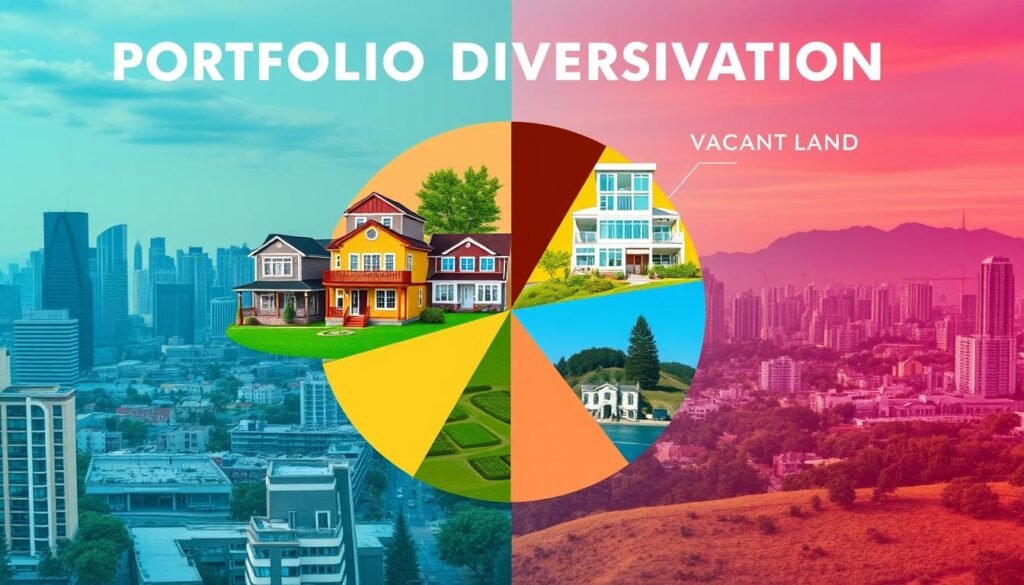
Diversifying Your Portfolio
Diversification is key to a successful real estate strategy. Instead of focusing on one type of property, explore different types and locations. This reduces risk and lets you take advantage of various market trends.
Consider adding multifamily properties to your portfolio. They offer income from multiple tenants, making them more stable than single-family homes. Plus, they tend to be more valuable near cities or areas with good schools and public transport.
Collaborating with Other Investors
Working with other investors can help you grow faster. By combining resources and risks, you can tackle bigger projects. It also means you can learn from others and grow quicker.
Good communication is crucial when partnering with investors. Talk about your goals, how you make decisions, and any problems you face. This keeps everyone on the same page and working towards your shared goals.
Remember, portfolio diversification and investment partnerships are key to scaling your success. By using these strategies, you’ll build a strong, lasting real estate portfolio.
| Multifamily vs. Single-Family | Advantages |
|---|---|
| Multifamily Properties |
|
| Single-Family Properties |
|
Marketing and Branding Your Empire
Starting your real estate journey means building a strong marketing and branding strategy. This includes having an online presence, using social media, and connecting with your local community. By doing this, you can draw in clients, partners, and investors, helping your real estate empire grow.
Building an Online Presence
Your online presence is crucial in today’s digital world. Create a professional website that showcases your services and achievements. Keep your site updated with blog posts and case studies to show your expertise.
Also, have an active social media presence on platforms like Instagram, LinkedIn, and Facebook. Use these to build your brand, share your properties, and connect with your community. Share valuable insights and connect with other professionals to grow your reach.
Networking in Your Community
While digital marketing is key, face-to-face networking is also vital. Attend local events, join real estate associations, and volunteer to build relationships. Collaborate with other professionals to create partnerships and promote your services.
“Surrounding myself with successful individuals in the real estate industry has been instrumental in expanding my possibilities. Their knowledge, experiences, and networks have been invaluable in navigating this dynamic market.”
Combine a strong online presence with community involvement for a well-rounded marketing strategy. Stay consistent, adapt to market changes, and always look for ways to improve your brand.
Analyzing Your Success
Exploring the world of real estate investing is exciting. It’s key to track your important performance indicators (KPIs) well. By watching your performance metrics closely, you get insights. These insights help you make better strategies for long-term success.
REN 360 is a great tool to consider. It’s an operating dashboard that shows all your real estate activities. This platform lets you watch and analyze your data. It helps you make smart decisions to improve your strategies.
Key Performance Indicators to Track
- Rental income
- Vacancy rates
- Maintenance and repair costs
- Tenant retention
- Cash flow
- Return on investment (ROI)
Adjusting Your Strategy Based on Data
When you regularly check your real estate portfolio’s data analysis, be ready to adjust your strategy. This ongoing improvement helps you keep up with market changes. It also lets you grab new chances and reach your goals.
“The key to success is not just acquiring properties, but rather actively managing and optimizing your investments based on the insights gained from your performance data.”
Using a data-driven approach helps you improve your strategic adjustments. It makes your decision-making better. This way, you can grow your real estate business even more. Always be alert, analyze your numbers, and let data lead you to real estate success.

Overcoming Common Challenges
As a real estate investor, you’ll face many challenges. These include dealing with market changes and handling difficult tenants. By tackling these issues head-on, you can keep your investments safe and your portfolio thriving.
Dealing with Market Volatility
The real estate market is always changing, which can affect your investments. To manage risks, keep up with economic trends and spread out your investments. This means having different types of properties, like apartments and commercial buildings.
Regular checks on your properties and having a savings fund can also help. These steps can help you get through tough times in the economy.
Handling Tough Tenants
Managing tenant relations can be tough. Make sure you screen tenants well to find good ones. Talk clearly with your tenants and stick to your lease agreements to solve problems fast.
If you have a bad tenant, you might need to call the police. This way, you handle the situation legally and safely.
By tackling market changes and tenant issues, you can succeed in real estate. Remember, being flexible and persistent are crucial. Adaptability and perseverance are the keys to overcoming real estate challenges.
“The key to success in real estate is not just about the properties you acquire, but how you manage the challenges that come with them. Staying flexible and learning from setbacks will ultimately lead to your long-term triumph.”
Celebrating Your Achievements
Look back on your real estate journey and celebrate your progress. Your hard work, vision, and dedication have built your real estate empire. Think about the challenges you’ve faced, the lessons you’ve learned, and the milestones you’ve hit. Celebrate your growth, both personally and professionally, as you keep redefining success.
Reflecting on Your Growth
Think back to your initial goals and how far you’ve come. You’ve likely exceeded your expectations and pushed past your limits. Celebrate your journey, from your first investment property to a diverse portfolio that brings in passive income. This journey has made you the savvy real estate entrepreneur you are today.
Setting New Milestones for Success
Now, with more confidence and experience, aim for new goals. Look for opportunities that match your business goals and values. Whether it’s growing your rental portfolio, exploring new niches, or trying new investment strategies, let your passion lead the way. By setting ambitious goals, you’ll keep moving forward. Embrace the business growth, goal achievement, and planning for the future that will take you to new success levels.