
Upstate New York is a treasure trove for real estate investors. It has everything from busy cities to peaceful countryside. This guide will help you understand the Upstate NY real estate market. It will turn your investment dreams into reality.
Upstate New York is full of different areas, each with its own charm. You can find everything from lively cities to beautiful landscapes. Knowing the local trends and economy helps you make smart investment choices.
Key Takeaways
- Upstate New York offers a diverse range of real estate investment opportunities, from urban centers to rural retreats.
- Researching local market trends, popular neighborhoods, and the impact of the regional economy is crucial for informed investment decisions.
- Navigating the Upstate NY real estate market requires a step-by-step approach, from setting your investment goals to managing your property.
- Leveraging technology and building a strong real estate network can enhance your investment success in the Upstate NY market.
- Continuous education and staying up-to-date on industry developments are essential for long-term real estate investment success in Upstate New York.
Understanding the Upstate NY Real Estate Market
As a real estate investor, it’s key to know the latest in Upstate New York’s market. This area has everything from busy cities to quiet countryside. Each spot has its own charm and chance for profit.
Key Trends to Watch
The market in Upstate NY is growing, with more people looking for affordable homes. There’s a big demand for vacation homes and investment spots, especially in the Finger Lakes and Adirondacks. Also, more people want homes that mix city life with nature.
Popular Neighborhoods for Investors
- Albany: The capital city, Albany, has a strong economy and a wide range of neighborhoods. It’s a great place for investors.
- Buffalo: Buffalo is changing fast, with old charm and new developments. Places like Allentown and Elmwood Village are full of investment chances.
- Ithaca: With Cornell and Ithaca College, Ithaca is full of culture and learning. It draws students and academics, making it a good spot for rentals.
The Impact of Local Economy
The local economy greatly affects Upstate NY’s real estate. Job growth, industry trends, and the area’s overall health can change property values and rental rates. Investors can find the best spots by studying the market and local economy.
| Key Economic Indicators | Upstate NY | National Average |
|---|---|---|
| Unemployment Rate | 4.8% | 5.2% |
| Median Household Income | $58,700 | $63,000 |
| GDP Growth Rate | 2.3% | 2.1% |
Knowing the latest trends, investment areas, and local economy helps investors make smart choices. Upstate New York offers many chances for success.
Setting Your Investment Goals
Starting your journey in real estate investment in Upstate New York? First, understand your strategy and financial goals. Are you after quick profits from flipping, or steady income from rentals? Knowing your investment goals helps choose the right property types and sets a realistic budget.
Short-Term vs. Long-Term Investments
Short-term flips offer quick cash but need more work and risk. Long-term rentals promise steady passive income and growth, but need more money upfront and patience. Think about your risk level, investment time frame, and cash flow needs to pick the best path.
Defining Your Budget
Creating a detailed budget is key for real estate success. Include the purchase price, down payment, loan costs, and ongoing expenses like taxes and insurance. Knowing all costs helps ensure your investment meets your financial goals.
Aligning Your Goals with Property Types
After setting your strategy and budget, look at the property types in Upstate New York. Options range from single-family homes to commercial properties. Study the local market, rental potential, and pick the best match for your goals.
“Successful real estate investing involves striking the right balance between risk, return, and cash flow. By taking the time to thoughtfully define your goals and budget, you’ll be well on your way to building a thriving investment portfolio in Upstate New York.”
Researching Potential Properties
Investing in upstate New York properties requires careful research. This step is key to finding the right opportunities. It ensures your decisions match your financial goals and strategy.
Online Resources for Property Search
The internet has changed how we find and analyze real estate. Sites like LandWatch and Land.com have huge databases of properties. You can filter by location, size, price, and more. These tools offer insights into property search and help find real estate listings that fit your goals.
Networking with Local Real Estate Agents
Networking with local agents is also crucial. They know the upstate New York market well. They share insider info on hot areas, trends, and hidden deals. Building strong relationships with agents can give you an edge in finding the best properties.
Attending Open Houses and Auctions
Visiting open houses and attending auctions is another great way to research. These events let you see properties up close and meet other investors. You can learn a lot about the local market and find new opportunities.
Successful property research combines online tools, local connections, and direct exploration. By thoroughly checking out properties, you make smart choices. This approach will help you succeed in upstate New York’s real estate market.
Financing Your Investment
Starting your real estate journey in Upstate New York means looking at your financing choices. Whether you’re new or experienced, knowing about mortgage options, interest rates, and loan pre-approval is key. It helps you find the best investment financing for your needs.
Traditional vs. Alternative Financing
Many investors in Upstate NY choose traditional mortgage loans. With homes priced around $449,285, you’ll need a down payment of 0% to 3.5%. But, low-income buyers might get up to $30,000 in down payment help.
For different financing, New York’s Achieving the Dream program has lower interest rates. The state’s down payment help offers up to $15,000 for low-income buyers. The DPAL PLUS loan gives up to $30,000 for those earning 60% or less of the median income.
Securing Pre-Approval for Loans
Getting a loan pre-approval is a big step. It shows sellers you’re serious and ready to buy. Conventional loans need better credit and down payments than FHA loans, which help those with less money and lower credit.
By exploring your financing options and getting pre-approved, you’re closer to finding your dream property in Upstate New York. A strong financial base is essential for making your real estate dreams come true.

Navigating Legal Considerations
Investing in Upstate New York properties comes with legal hurdles. You need to grasp property taxes and title insurance. Each real estate deal has legal parts that must be handled carefully.
Understanding Property Taxes
Property taxes are a big deal. They change based on where the property is, its type, and local rates. Knowing the past and future tax costs is key. These costs can affect your investment’s return.
The Importance of Title Insurance
Title insurance is vital. It shields you from unexpected issues with the property’s ownership. Rochester’s Lacy Katzen LLP has helped investors for over 70 years. They make sure you’re covered.
Local Zoning Laws and Regulations
Understanding local zoning laws is essential. These laws affect how you can use the property and any future changes. Working with local attorneys, like those at Lacy Katzen LLP, ensures your investment meets all legal standards.
| Legal Consideration | Key Factors |
|---|---|
| Property Taxes |
|
| Title Insurance |
|
| Zoning Laws and Regulations |
|
By tackling these legal aspects, you can invest in Upstate New York with confidence. This approach helps avoid risks and boosts your investment’s potential.
Conducting Property Inspections
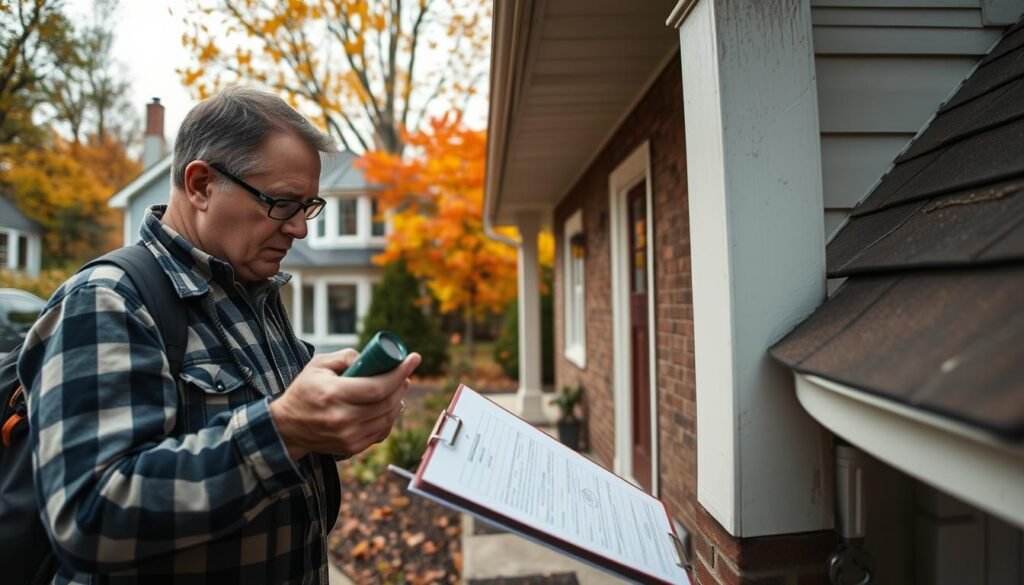
Investing in Upstate NY real estate requires careful property inspections. A professional home inspector can offer valuable insights. This helps you make smart choices and negotiate better deals.
Hiring a Professional Inspector
A certified home inspector checks the property from foundation to roof. They spot issues that you might miss. The cost of a home inspection in Upstate NY is between $200 and $600. It depends on the property’s size, age, and location.
Common Issues to Look For
- Structural integrity: Checking for cracks, settling, or other signs of foundation or framing problems
- Electrical and plumbing systems: Ensuring they are up to code and functioning properly
- Roof and exterior: Inspecting for leaks, damage, or necessary repairs
- Heating, ventilation, and air conditioning (HVAC): Evaluating the age, efficiency, and condition of the system
- Insulation and energy efficiency: Identifying opportunities for cost-saving upgrades
Understanding Inspection Reports
The inspection report is key to your decision-making. It details the property’s condition and any issues. It’s crucial to review it carefully and understand its impact on your investment.
By doing thorough inspections and understanding the reports, you can make informed decisions. This ensures your Upstate NY real estate investment is wise and profitable.
Conducting Neighborhood Analysis
As a smart real estate investor in Upstate New York, doing a deep neighborhood analysis is key. You need to look at crime rates, school quality, and local amenities. This helps you make choices that fit your investment goals.
Evaluating Crime Rates
Safety is very important for you and your tenants. Checking crime stats in the area gives you insight into safety. Use online tools like police websites and crime maps to see what crimes happen there.
Assessing School District Quality
The local school district’s quality matters a lot, especially for families. Look up school ratings and local education info online. This helps you find areas that meet your renters’ or buyers’ needs.
Access to Amenities and Public Transport
Having nearby amenities and public transport makes a neighborhood better. Check how close properties are to shops, hospitals, and parks. Also, see if public transport is easy to use. This is key for many people.
By carefully looking at these neighborhood factors, you can make smart choices for your Upstate New York real estate. Balancing these with your goals helps you make decisions that are good for your business and your tenants or buyers.
| County | Population | Average Sold Price Per Acre | Median Household Income | Median Property Tax |
|---|---|---|---|---|
| Albany County | 313,743 | $60,781.84 | $73,810 | $3,526 |
| Columbia County | 61,778 | $25,761.73 | $73,065 | $3,605 |
| Dutchess County | 297,112 | $59,017.02 | $87,112 | $4,873 |
| Greene County | 48,499 | $65,474.17 | $62,810 | $2,584 |
| Orange County | 404,525 | $119,923.72 | $85,640 | $5,586 |
| Putnam County | 97,936 | $96,629.10 | $111,617 | $7,331 |
| Rensselaer County | 160,232 | $22,408.06 | $76,731 | $3,529 |
| Rockland County | 339,227 | $296,887.98 | $99,707 | $8,268 |
| Ulster County | 182,319 | $50,954.46 | $80,372 | $4,208 |
| Westchester County | 997,895 | $275,605.65 | $105,387 | $9,003 |
The table shows important stats for different counties in Upstate New York. It includes population, average sold price per acre, median income, and property tax. This info is useful when looking at investment opportunities and neighborhood viability.
Crafting Your Offer
As a real estate investor in Upstate New York, making a strong offer is key. You need to understand the market value, negotiate well, and handle multiple offers. This guide will help you make a winning bid.
Analyzing the Market Value
Finding the fair market value of a property is crucial. Do a detailed market analysis by looking at similar properties sold recently. Think about the property’s size, number of rooms, and features to make sure your offer is fair.
Negotiation Strategies
- Know what the seller wants: Find out their timeline, financial needs, and any special situations that might affect their choice.
- Be ready to give in: Decide where you can be flexible, like the closing date or specific features, to find common ground.
- Use market data: Show the seller why your offer is good, with examples of recent sales and market trends.
Dealing with Multiple Offers
In a competitive Upstate NY market, you might face a bidding war. Stay calm and use these strategies:
- Act fast: Be ready to submit your best offer quickly, as popular properties get many offers fast.
- Make your offer unique: Think of creative ways to stand out, like a personal letter or flexible closing dates.
- Get help from your agent: Work closely with your agent to handle the bidding process and make sure your offer is strong.
To win in Upstate New York’s real estate market, you need good property valuation, smart negotiation, and a solid competitive bidding plan. With the right approach, you can find the perfect property for your real estate journey.

Closing the Deal
As you near the end of your Upstate NY real estate journey, closing is key. Knowing how closing works can make this step smooth. It ensures you own your property without trouble.
Understanding Closing Costs
Closing costs in New York can be high, from 8% to 10% of the sale price. This is more than in states like Missouri or Colorado. These fees include lawyer costs, title insurance, and taxes. Make sure to check these costs and include them in your budget.
The Timeline of Closing
The closing time in Upstate NY can change, but usually takes 30-45 days. You’ll do a final check, review papers, and meet any conditions. In the U.S., people own homes for about 15 years. In New York City, it’s 9.8 years, and in Buffalo, it’s 16 years.
What to Expect on Closing Day
Closing day means lots of paperwork to sign. This includes the deed and mortgage papers. Both sides will have lawyers to make sure everything goes right. It’s important to understand each document before signing.
The final walkthrough is crucial. It lets you check the property’s condition and any agreed repairs. This is your last chance to find any problems before you own the property.
Closing a deal in Upstate NY can be complex. But with the right knowledge, you can handle it. Knowing about closing costs, the timeline, and what happens on closing day will help you succeed in your property investment.
Managing Your Investment Property
Managing your rental properties well is key to making more money in Upstate New York. You can do this by hiring professional property management services. It’s also important to know about tenant rights and keep up with maintenance schedules. This guide will help you with all these important steps.
Hiring Property Management Services
Managing your properties yourself can give you more control. But, working with a good property management company can make things easier. They handle things like finding tenants, collecting rent, and keeping the property in good shape. This lets you focus on making smart investment choices.
Understanding Tenant Rights
Knowing the local tenant laws is vital for a good landlord-tenant relationship. You need to know about things like security deposits, how to evict tenants, and fair housing rules. This helps you avoid legal problems and keeps your tenants happy.
Regular Maintenance Tips
Having a good maintenance schedule is key to keeping your properties valuable and avoiding expensive repairs. Check your properties often, fix problems quickly, and do regular maintenance like cleaning gutters and checking HVAC systems. This keeps everything running smoothly.
| Key Considerations for Managing Your Investment Property |
|---|
|

Using smart property management strategies can help your Upstate NY properties keep making money. It also helps you avoid stress and spend more time on what you love. Stay informed, act quickly, and use the right tools to succeed as a real estate investor.
Marketing Your Property
As an Upstate New York property investor, finding the right tenants or buyers is crucial. Using various strategies can make your listings stand out. This can lead to better returns. Let’s look at the importance of property marketing, online listings, open house tips, and social media advertising.
Effective Online Listing Strategies
Your online presence is vital in today’s real estate world. Create listings that highlight your properties’ best features. Use high-quality photos and virtual tours for a detailed look. Make sure your listings are easy to find by using the right keywords and descriptions.
Open House Best Practices
Hosting a successful open house can draw in potential buyers. Make sure your property looks great and feels welcoming. Offer detailed brochures and answer questions to help people understand your property’s value. This feedback can improve your marketing.
Social Media Promotion Techniques
Social media is a key tool for marketing today. Use platforms like Facebook, Instagram, and LinkedIn to showcase your properties. Create eye-catching posts, use hashtags, and interact with your followers to spark interest.
Using a mix of marketing tactics can help your Upstate NY properties get noticed. Remember, marketing is an ongoing effort. Keep improving your strategies to stay competitive.
Understanding Rental Income
Exploring the Upstate NY real estate market? Knowing about rental income is key. It helps boost your [https://frankraspante.org/contact/]rental yield and total return on investment (ROI). By setting good rent prices and screening tenants well, you can get steady income and keep your investment safe.
Calculating Total ROI
To figure out your total ROI, look at the [https://frankraspante.org/contact/]rental yield, property value growth, and extra income. Analyzing these helps you choose the best properties for long-term success.
Setting Competitive Rent Prices
- Check the local market to find out average rental rates for similar properties.
- Consider the property’s features, location, and condition when setting rent. This attracts good tenants.
- Keep an eye on market trends and adjust your rent to ensure a steady cash flow.
The Importance of Tenant Screening
Good [https://frankraspante.org/contact/]tenant screening is vital to protect your investment. It helps avoid problems like late payments, property damage, and more. These issues can hurt your rental income and ROI.
| Rental Yield | ROI Calculation | Rent Pricing | Tenant Screening |
|---|---|---|---|
| Understand the local rental market to set competitive rates and maximize your rental yield. | Consider factors like property value appreciation, additional income streams, and operating expenses to calculate your total ROI. | Research the local market, factor in property amenities, and periodically adjust rent to maintain a healthy cash flow. | Implement a thorough screening process to minimize the risk of late or non-payments, property damage, and other issues that can impact your investment. |
“Successful real estate investing is about understanding the local market, setting the right rent prices, and protecting your investment through diligent tenant screening.”
Planning for Market Fluctuations
As a real estate investor in Upstate New York, you must prepare for market ups and downs. Real estate prices go through cycles that last 7-10 years. It’s vital to diversify your investments to lessen the impact of economic downturns.
Diversifying Your Investment Portfolio
Diversification is key to handling market volatility. Invest in different types of properties, like homes, businesses, and industrial sites. Also, look into REITs, crowdfunding, and real estate trusts to diversify more.
Strategies for Economic Downturns
When the economy gets tough, having a plan is crucial. Refinance properties to lower monthly payments, boost rental income, and keep a cash reserve. These steps can help you stay financially stable during hard times.
Staying Informed on Market Changes
It’s important to keep up with economic trends and real estate cycles. Stay informed about local and national economic signs, real estate data, and talk to industry experts. This way, you can make smart choices for your investments.
| Key Statistic | Impact on Real Estate |
|---|---|
| Real estate prices move in 7-10 year cycles | Requires long-term planning and diversification to navigate market fluctuations |
| Inflation serves as a natural tailwind for real estate investments | Rents tend to rise with inflation, making homeownership a more stable option compared to renting |
| The financial meltdown caused a 22% decline in market value | Highlights the importance of preparing for economic downturns through diversification and strategic planning |
“Ownership of real assets is considered advantageous due to the depreciating value of currency.”
By diversifying your investments, planning for downturns, and staying informed, you can handle market volatility. You can also take advantage of economic trends in Upstate New York’s real estate cycles. With a proactive strategy, you can create a diversified investment that can weather market ups and downs.
Leveraging Technology in Real Estate
In the fast-changing world of real estate, smart investors use technology to get ahead. They use tools to manage properties better and market them more effectively. Let’s see how you can use the latest tech to boost your real estate investments.
Property Management Software
Good property management is key to real estate success. Luckily, many software solutions are out there to help. These tools automate tasks like rent collection and tenant communication. This lets you focus on making big decisions.
Virtual Tours and Drone Photography
Now, people can see properties online without visiting. Virtual tours and drone photos give a detailed look at properties. They highlight the property’s best features and the area around it. This makes marketing easier and helps with initial property checks.
Online Market Analysis Tools
Understanding the local real estate market is crucial for smart investing. Online tools offer valuable insights. They give real-time data on sales and rental rates, and predict market trends. These tools help find good investment spots and guide your decisions.
Proptech can make your real estate investing smoother, reach more people, and lead to better choices. Whether you’re new or experienced, the right tech can help you succeed in Upstate NY’s real estate market.
Building a Real Estate Network
Starting as a real estate investor in Upstate New York means you need a strong network. Joining the local real estate community can give you insights and opportunities. It’s all about going to networking events, joining groups, and finding mentors.
Attend Local Real Estate Meetups
Upstate New York has a lively real estate scene with many events. These meetups are great for meeting investors, learning about trends, and finding properties. Look for events from local associations or online groups like Meetup.com.
Join Investment Groups
Being part of investment groups in Upstate New York is also beneficial. These groups let investors share knowledge and find deals. Some top groups include the Buffalo Real Estate Investors Association, the Rochester Real Estate Investors Club, and the Adirondack Real Estate Investors Association.
Find a Mentor in Real Estate
Finding a mentor is crucial for new investors. Look for experienced people in your area who can guide you. They can help you avoid mistakes and grow faster.
Building a strong network in Upstate New York is key to success. By engaging with the community, you’ll set yourself up for long-term success in the market.
Continuing Education on Real Estate Investment
As you start your journey in real estate investing in Upstate New York, learning is key. Taking courses, getting certifications, and using industry resources can set you apart. They help you understand the changing Upstate NY property market.
Courses and Certifications to Consider
Look into local schools and real estate groups for special programs. They cover topics like property value, investment plans, taxes, and laws. Getting certifications like CREI or CPM shows you’re serious and knowledgeable to others.
Staying Updated on Legislation
Keep up with new laws and rules that affect your investments in Upstate NY. Read industry news, go to real estate events, and talk to lawyers. This way, you can make smart choices and avoid legal issues.
Resources for Ongoing Learning
Use many resources to keep learning about real estate. Join groups, read newsletters, and use online forums. Also, find a mentor to guide you through the Upstate NY investing world.